


Axis Brass Cone Wall Light
- Free Shipping to the U.S.
- Secure Checkout (SSL Encrypted)
- 30-Day Hassle-Free Return
- Money-Back Guarantee
- 24/7 Professional Customer Service
- In stock, ready to ship
Crafted from solid brass with a smooth brushed finish, this wall light features a minimalist cone-shaped silhouette that directs light both downward and outward, creating a refined wall-washing effect. The slim circular base maintains a clean profile while the warm brass tone enhances its sculptural simplicity. Ideal for hallways, living rooms, or bedrooms, it delivers soft ambient illumination with a subtle architectural presence that complements modern interiors.

| Product Info | |
| Product Type | Wall Lamp |
| Best Match With | Living room / Bedroom |
| Indoor/Outdoor | Indoor |
| Assembly Required | Yes |
| IP Rate | IP20 |
| Power Source | Hardwired |
| Power Info | |
| Bulb Type |
LED / Incandescent / Fluorescent
|
| Bulb Base | G9 (Not Included) |
| Voltage (V) | 110V-240V |
| Product Material | |
| Primary Material | Aluminium, Acrylic |
|
Color
|
Chrome, Copper |
| Product Measurements & Weights | |
| Size | See Images |
| Included Components | |
| 1*Wall Lamp Set | |
| Note | |
| Please kindly note that there may be an error of 1 inch of the size due to manual measurement.The pictures may have slight chromatism due to the light and the monitor.Your understanding is appreciated.It's recommended that the installation of the lamp is performed by a professional electrician. | |
Lighting is both functional and architectural. The right fixture size brings balance, proportion, and harmony to a room—while an undersized or oversized fixture can disrupt the entire design.
This guide walks you through the professional formulas designers use to select the ideal diameter, height, and hanging distance for chandeliers, pendants, flush mounts, sconces, and more.
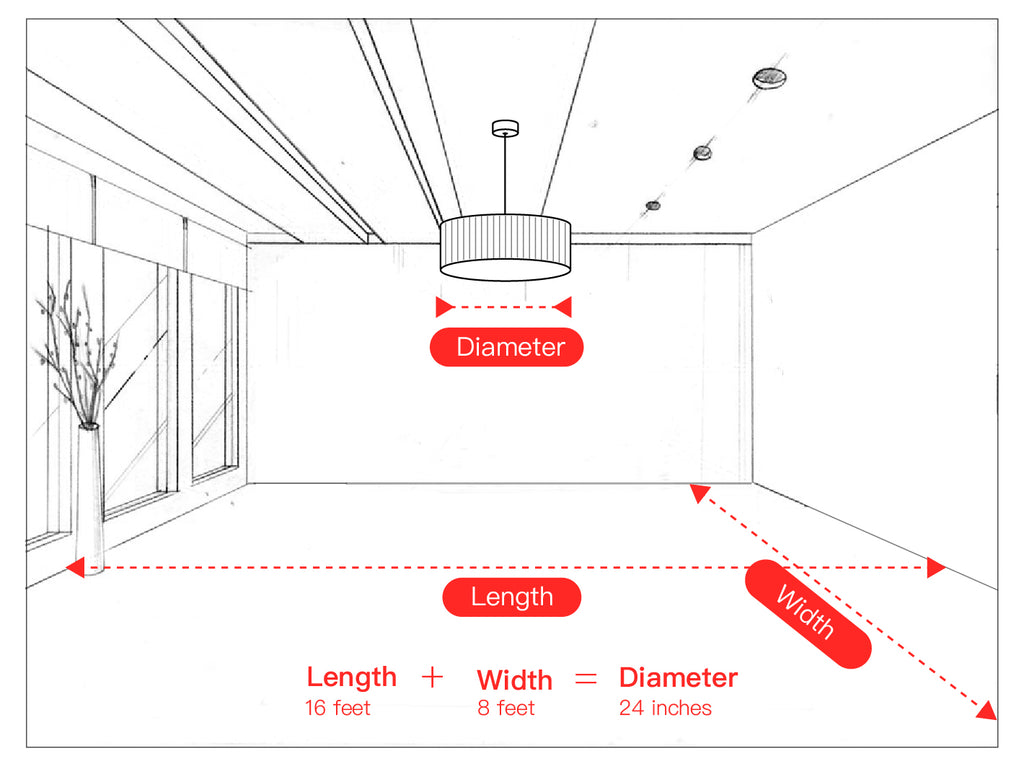
General Formula for Fixture Diameter
The simplest way to find the correct diameter is to size the fixture relative to the room dimensions.
How to calculate:
-
Measure the length and width of the room (in feet).
-
Add the two numbers together.
-
Convert the total to inches — this equals the ideal fixture diameter.
Example:
Room: 12 ft × 14 ft
12 + 14 = 26 → A fixture around 26 inches in diameter will feel properly scaled.
How to Determine Fixture Height
The height of the fixture should relate to the room height.
Simple designer rule:
Room Height (ft) × 2.5–3 = Recommended Fixture Height (inches).
Example:
Ceiling height: 10 ft
10 × 2.5–3 → Fixture height should be 25–30 inches.
This creates visual balance and avoids the fixture feeling too heavy or too flat.

Hanging Height Guidelines
(For surfaces like dining tables, kitchen islands, bedside tables)
Dining Table
Hang the bottom of the chandelier or pendant:
32–36 inches above the tabletop.
Kitchen Island
For pendants:
32–36 inches above the countertop for comfortable task lighting.
If using multiple pendants:
– space them 26–30 inches apart
– ensure the outer pendants align visually with the island edges

Choosing Fixture Size by Room Type
| Fixture Diameter | Suitable Room Size | Recommended Rooms |
|---|---|---|
| 8"–12" | 40–80 ft² | Entryway, Hallway, Bathroom |
| 13"–18" | 80–150 ft² | Small Dining, Breakfast Nook |
| 19"–24" | 150–250 ft² | Kitchen, Bedroom |
| 25"–32" | 250–350 ft² | Dining Room, Living Room |
| 33"–40" | 350–500 ft² | Large Living, Open Concept |
| 40"+ | 500+ ft² | Double-height, Commercial Interiors |
Upon delivery of the goods, you will promptly examine them. If any of the goods ordered have been damaged in transit or have been incorrectly shipped, does not meet your requirements or are defective through faulty material or factory workmanship. Please kindly notify us by writing to us through email at contact@arteluxatelier.com within 30 days from the date of delivery of the relevant goods.
Trusted secure payment powered by Adyen, currently accept major credit cards (VISA, Mastercard, AMEX, etc.) and PayPal. Fortified with advanced SSL encryption technology, provides a reliable shield to safeguard your sensitive personal and financial information.

