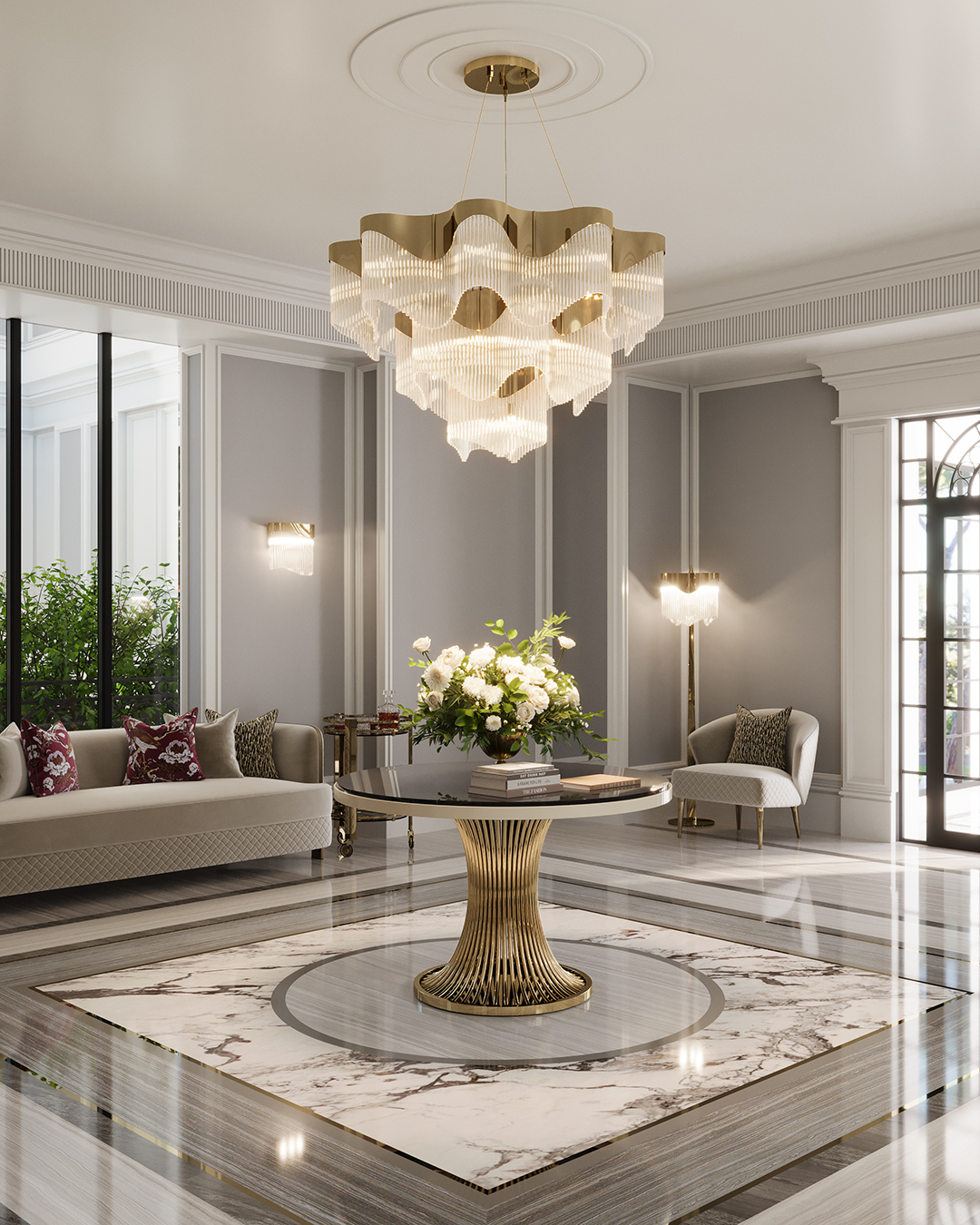
How Designers Choose Statement Lighting for High-End Interiors
Why Statement Lighting Is a Design Decision, Not Decoration
In high-end interior projects, lighting is never treated as an afterthought. Designers approach statement lighting as a spatial decision, not a decorative one. The right fixture defines how a room is perceived—its scale, rhythm, and sense of permanence.
Unlike purely decorative lights, statement fixtures are selected to:
-
Establish a visual anchor within the space
-
Balance architectural elements such as ceiling height and room volume
-
Introduce material contrast without visual clutter
This is why designers often prefer fewer, more intentional fixtures over multiple decorative lights. A single sculptural piece can do more for a space than several smaller ones competing for attention.
How Designers Read a Space Before Choosing a Fixture
Before selecting any lighting, designers evaluate the room as a whole. The fixture comes after understanding the architecture—not before.
Ceiling Height and Visual Weight
Ceiling height plays a critical role in determining whether a space can support a statement light. High ceilings allow for vertical presence, while lower ceilings require visual weight without physical depth.
In these cases, designers look for fixtures that:
-
Feel substantial without overwhelming the room
-
Create presence through form rather than drop length
-
Maintain a clean silhouette
This is one reason sculptural chandeliers are often favored in spaces with generous volume, where they can establish hierarchy without excess ornamentation.
👉 Collection reference:
Designers frequently explore sculptural chandelier collections when a space requires a strong focal point without visual noise.
Open-Plan Interiors and Focal Points
In open-plan homes, lighting is often used to define zones without walls. A statement fixture above a dining area or living space creates a sense of structure while maintaining visual flow.
Rather than matching fixtures across zones, designers often:
-
Use one dominant piece as the focal point
-
Support it with minimal, recessed, or architectural lighting elsewhere
This approach keeps the space cohesive while allowing one element to lead the visual narrative.
Material as a Signal of Quality and Permanence
In luxury interiors, materials speak before form. Designers choose lighting materials that communicate longevity, craftsmanship, and restraint.
Why Natural Stone Signals Refinement
Natural stone—particularly alabaster—has become a hallmark of high-end lighting for good reason. Its soft translucency diffuses light evenly, creating warmth without glare, while its natural veining ensures no two fixtures are identical.
Designers value alabaster because it:
-
Ages gracefully rather than feeling trend-driven
-
Adds depth without relying on decoration
-
Feels architectural, not ornamental
👉 Collection reference:
For projects that prioritize material authenticity, designers often turn to alabaster lighting collections as a long-term investment.
Metal Finishes and Tactile Detail
Beyond stone, hand-finished metals—such as brushed or aged brass—add another layer of quiet luxury. These finishes develop character over time, reinforcing the idea that a space should evolve rather than remain static.
Designers avoid overly polished or reflective surfaces in statement lighting, preferring finishes that absorb and soften light.
Trends vs. Timelessness in High-End Lighting
While trends influence awareness, they rarely dictate final decisions in high-end projects. Designers focus on whether a fixture will still feel relevant in ten or twenty years.
Statement lighting is evaluated through questions like:
-
Does this form rely on a trend, or on proportion?
-
Will the material age with character?
-
Does the fixture support the architecture, or compete with it?
Timeless lighting tends to be:
-
Sculptural but restrained
-
Material-driven rather than decorative
-
Confident without being loud
This philosophy ensures that lighting enhances the space rather than defining it temporarily.
Why Designers Invest in Fewer, Better Fixtures
One of the clearest differences between mid-range and high-end interiors is restraint. Designers working on premium projects often allocate more budget to one defining fixture instead of spreading it across many.
The result:
-
Cleaner visual hierarchy
-
Stronger emotional impact
-
Greater long-term value
For homeowners, this approach leads to spaces that feel intentional and considered—rather than over-designed.
Conclusion: Statement Lighting as Spatial Identity
Statement lighting in high-end interiors is not about following trends or filling a room with light. It is about defining identity through form, material, and proportion.
When chosen thoughtfully, a sculptural fixture becomes part of the architecture itself—shaping how a space is experienced, remembered, and lived in. This is why designers treat lighting not as a product choice, but as a design decision with lasting impact.